Charleston drivers know the drill. Salt air, sun-hammered summers, a stray stone from I-26, then a crack that wasn’t there yesterday starts creeping across the glass. When you stare at a windshield flaw long enough, you learn to tell which ones are benign and which ones are time bombs. I run through that calculus every day with customers around the Lowcountry. Some fixes are quick and inexpensive. Others need a full replacement, done with the right glass, adhesives, and calibration so the vehicle drives the way it should.
What follows is a practical tour through the decisions behind windshield repair and replacement in Charleston. I’ll cover what’s worth fixing, what must be replaced, how mobile service actually works, why ADAS calibration isn’t optional, and where insurance fits. I’ll also touch on rear and side glass, leaks after heavy rain, and how to avoid common pitfalls that cost more later.
How Charleston’s climate and roads treat glass
The Lowcountry has its own mix of glass stressors. Hot, humid afternoons, then an evening storm, then bright morning sun. These cycles expand and contract glass and can turn a tiny chip into a finger-length crack in a day. Highway projects throw loose aggregate into lanes, and the Port corrals heavy truck traffic, which means more debris kicked up at speed. Out on Folly or Sullivan’s, salty mist lingers on glass and seals. None of this is catastrophic on its own, yet it accelerates every small problem.
I’ve seen a bullseye chip on a Tuesday, completely stable, then after a Friday storm and a weekend beach run, it laddered into a nine-inch crack. Part of that is temperature swing. Part is the flex in the vehicle body on older bridges and pitted roads. If you spot a chip and you can cover it with a quarter, you have a decent chance at a successful repair, but time matters more here than it does inland. The longer moisture and grit sit inside a chip, the lower the odds of an invisible repair.
When a repair is a smart call
Most drivers with windshield repair in Charleston SC start with one question: can we fix the chip? The answer depends on size, location, and contamination. In practical terms, chips smaller than a quarter and cracks under six inches that are not in the driver’s direct line of sight can often be repaired. The resin bonds best when the damage is fresh and dry. If it rained yesterday, we can still do it, but we need to dry the spot carefully and apply a vacuum before injecting resin.
A textbook repair uses a bridge and injector to draw out air, pull resin into micro-fractures, then cure with UV light. Done right, the structural integrity returns to near-original. The cosmetic result varies. Star breaks sometimes leave faint legs visible at certain angles, especially on dark dashboards where contrast is high. That’s normal. The goal is to stop the spread and restore strength.
One caveat I share with every customer: chips near the edge of the glass are more fragile. The windshield bonds to the body at the perimeter, and cracks here propagate faster. I’ll still attempt a repair if the geometry looks stable, but I warn that success rates are lower at the edges, and a replacement might be the smarter long-term choice.
Where replacement becomes the safer route
There’s a point where auto glass replacement in Charleston SC simply makes sense. Long cracks past six to eight inches, damage in the driver’s primary viewing area, multiple chips clustered like peppered glass, or cracks that reach the edge are common triggers. Also, if you see delamination around the crack, almost like a shadowy halo between glass layers, that windshield has lost more than surface integrity.
Safety is the decider. Windshields do more than block wind. They serve as a backstop for the passenger-side airbag on many vehicles and contribute to the roof’s structural performance. A compromised windshield can fail under the force of an airbag deployment or during a rollover. I’ve seen a car come in after a minor collision where the bag deployed hard and popped the cracked glass outward at the top corner. That could have gone differently with intact glass and fresh urethane.
If we replace, we match the glass to the vehicle’s features. Many models in the last 7 to 8 years carry sensors behind the glass: rain sensors, light sensors, cameras for lane keeping, or heads-up display zones. Part numbers matter. So do tint bands and acoustic interlayers. A cheap piece that “fits” can end up with a distorted camera view, more interior noise, or a HUD that looks slightly doubled at night.
The pace and quality of mobile service
Mobile auto glass in Charleston SC saves a morning of sitting in a shop, but not all driveways or parking lots work for a safe install. Two things matter most: weather and surface conditions. Adhesive urethanes have temperature and humidity windows for proper cure. The Charleston summer is humid, which is fine for many modern urethanes, but we avoid installs during steady rain or under blowing sand by the beach. A carport, garage, or a shaded, clean spot is ideal. I carry pop-up shelters to shield the work when needed, but wind is the enemy. One grain of grit under a mold or in the urethane bead can create a leak path or squeak.
Expect a typical windshield replacement to take 60 to 120 minutes, then a safe drive-away time that ranges from 30 minutes to a couple of hours depending on the adhesive system and conditions. I give a realistic window and won’t rush a cure. Cutting corners here is how rattles, wind noise, and leaks happen.
The step-by-step rhythm of a proper replacement
Customers often feel better when they know what’s happening to their vehicle. Here’s a concise snapshot of a quality workflow from the moment we arrive to the first mile down the road:
- Protect the interior and paint, remove trims and wipers, then cut out the old glass carefully to avoid scratching the pinch weld. Clean and prepare the bonding area, apply primer where needed, and set the bead with consistent height and shape for even compression. Place the new glass using a setting tool or two-person lift for precision, reinstall trims, cowl, and hardware, then verify sensor housings and gaskets sit square. Allow proper cure time, perform ADAS calibration if required, and water-test the perimeter to check for leaks and wind noise. Review care instructions, including when to remove tape, when to wash, and how to avoid slamming doors that could jostle uncured adhesive.
That is the first of the two lists you’ll see here. It’s the only efficient way to show the sequence without bogging you down in jargon.
ADAS calibration isn’t optional
Many late-model vehicles with driver assistance rely on a forward-facing camera mounted to the windshield. After glass replacement, the camera’s relationship to the road changes by millimeters, which is enough to skew lane-reading or adaptive cruise accuracy. That’s why ADAS calibration in Charleston SC deserves as much attention as the glass itself.
There are two approaches: static calibration using targets inside a controlled space, and dynamic calibration that involves a specific driving routine at defined speeds on well-marked roads. Some vehicles require both. For example, a common compact SUV we see in Mount Pleasant needs a static calibration that takes about 45 minutes, followed by a short dynamic drive. Weather and lane markings matter. On days when afternoon storms smear paint and drop branches, I’ll schedule around the conditions to get a reliable calibration result.
If your dashboard radar or camera lights up with errors after a replacement, don’t shrug it off. Ask for a calibration printout, which shows that the procedure succeeded and the tolerances are within the manufacturer’s specs. A shop that skips calibration is gambling with your safety and liability.
Chip repair that holds up in real traffic
Chip repair in Charleston SC isn’t glamorous, yet it’s often the smart money. I’ve fixed a dozen small breaks in one day on cars heading to Atlanta for a Monday meeting. Those drivers aren’t thinking about optics, just structural stability. The best technique is still patience: clean the cavity, use a resin with the right viscosity for the damage type, and give the UV cure full time. Afterward, don’t blast the defroster on high heat within an hour. Let the resin settle. If a chip sits near a heating element in a windshield with defrost lines, I warn customers it may show more.
There’s one more tip that saves repairs: cover the chip with clear tape as soon as possible. It keeps out water and grit until you can get to us. I keep a small roll of packing tape in the glovebox for that reason. A clean chip repairs stronger than a dirty one every single time.
Rear window replacement that clears quickly
Rear window replacement in Charleston SC has its own quirks. Most back glass includes the defroster grid and sometimes an antenna. On hot days, those narrow conductive lines are easy to scratch during cleanup if a tech is in a hurry. I treat them like live wires and use plastic blades and adhesive removers that won’t damage the grid. After replacement, I test continuity before the vehicle moves. No one wants to discover a dead defroster on a foggy morning crossing the Ravenel.
Sedan trunks and hatchbacks create a funnel for water and dust. I re-seat and seal the trim and clips carefully, then do a hose test. A tiny misalignment here can drip water straight into your cargo area. It doesn’t take a storm to show up, only a car wash.
Side window repair and replacement details
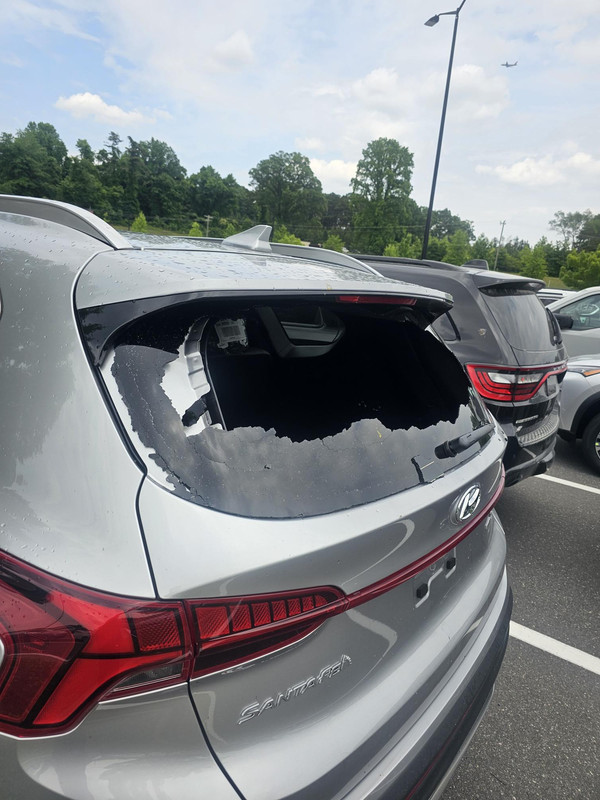
When a side window shatters, it’s usually a tempered glass explosion that leaves small cubes everywhere. Side window repair in Charleston SC often means replacement rather than repair, since tempered side glass isn’t usually repairable the way laminated windshields are. The key is a thorough vacuum of door cavities, seat rails, and speaker grilles. I’ve pulled handfuls of glass from places most people never think to check, like the felt lower channels and door seal folds. Leaving those fragments creates rattles and can scratch the new glass.
If your vehicle has laminated front side glass for sound reduction, that is repairable in certain chip scenarios, though it’s rare. Be aware that laminated side glass is heavier and pricier, but it does an excellent job cutting highway noise on 526.
Preventing and fixing leaks after a storm
Glass leak repair in Charleston SC spikes after weather swings. A leak can come from three sources: an installation gap in the urethane, a clogged sunroof drain, or a failed body seal unrelated to the glass. I start with a pressure and hose test, then remove trim and inspect the perimeter bond. The point is to find the exact path of the water, not guess and gob caulking everywhere. On sunroof drain clogs, compressed air and a soft wire line usually clear it. On true glass bond leaks, a reseal may work if the gap is accessible and minimal. If the urethane bead is inconsistent or contaminated across a large area, a pull and reinstall is the honest fix.
One thing to avoid is aftermarket mirror mounts or dashcam wiring that sits under the top molding. I’ve seen well-intentioned installs lift the molding just enough to invite water. If you’re adding accessories, route wires through factory pass-throughs or ask your glass tech for guidance.
The insurance side without the runaround
Insurance auto glass in Charleston SC varies by policy. Some plans include full glass coverage with no deductible, common on certain high-end vehicles. Others require you to meet your collision or comprehensive deductible. If your deductible is $500 and the replacement is $350, it’s not worth filing. For chip repairs, many insurers waive the cost entirely, since a repair prevents a bigger claim later.
You do not have to use the shop your insurer suggests, although steering toward preferred vendors is common. Choose a shop that can bill your carrier directly, document the ADAS calibration, and back their work with a warranty. I submit calibration sheets and set photos with each claim because it reduces back-and-forth. If you’re unsure, call your agent and ask two questions: does my policy cover chip repair at no cost, and does it cover OEM glass if ADAS sensors require it? Some brands insist on OEM for proper camera imaging. In those cases, insurers often approve the higher cost once the need is documented.
OEM, OEE, and aftermarket glass, without the jargon
Here’s the real-world difference. OEM glass comes from the original manufacturer and usually carries the carmaker’s logo. OEE, or original equipment equivalent, is produced by suppliers that meet the same specifications and often the same factories, just without the logo. Aftermarket can vary widely. I use OEE frequently on vehicles without complex HUD or camera requirements, because fit and optics are solid and price is friendlier. For vehicles with finicky cameras, curved HUD zones, or acoustic interlayers that affect noise levels, OEM pays off. I’ve had one luxury SUV where the HUD double-ghosted with a certain aftermarket brand. We swapped to OEM, and the ghosting disappeared. That’s not a theoretical debate. It’s what your eyes will see at night on I-26.
Why a clean cut matters more than speed
On an older car with a few paint chips around the windshield frame, a rushed cut-out can scratch the pinch weld. That scratch will rust. In coastal Charleston, rust blooms fast. Before setting new glass, I treat any exposed metal with primer designed for urethane bonding. It adds minutes to the job and saves you from rust creeping under the bond line and causing leaks a year later. You may never see this step, but it’s one that separates a good install from a quick one.
I also favor one-use blades for each cut. Dull blades push rather than slice and increase the odds of scuffs. If you ever watch an install, you’ll notice the tech changes blades more than you’d expect. That’s deliberate.
What a quality shop looks like, without the sales pitch
You can tell a lot from a first conversation. A solid shop in auto glass Charleston SC asks about your vehicle’s exact features, not just the year and model. They ask where the chip sits or how long the crack is, and they bring up weather and ADAS calibration without you prompting. They give a realistic safe drive-away time, not the shortest one you want to hear. They explain what you need to do after the job, without scaring you or glossing over details.
If the shop dodges questions about calibration or doesn’t mention it on a car that clearly has lane-keep assist, consider that a red flag. Likewise, if a quoted price seems dramatically lower than others, ask which glass brand they’re using and whether it includes sensors, moldings, and calibration. Sometimes a bargain is fine. Sometimes it’s missing half the work.
Cost ranges you can actually use
Prices shift with glass availability and sensor complexity, so ranges help more than exact numbers. A basic chip repair runs less than a nice dinner for two, often covered by insurance. Standard windshields on older cars without sensors might fall in the low hundreds. Modern SUVs with camera brackets, acoustic layers, and HUD can rise into four figures, especially with OEM glass and calibration. Rear windows are usually midrange, factoring in defroster and antenna. Side windows tend to cost less than a windshield but more than a chip repair, with variability based on tint and shape.
If you need mobile service on a barrier island or at a worksite with limited access, ask about a travel fee. Most reputable shops keep it reasonable or waive it when scheduling multiple vehicles at a fleet yard.
Aftercare that prevents squeaks and leaks
Customers often ask what they can do after the replacement to make it last. Tape stays on for the time we recommend, usually a day. Avoid high-pressure car washes for a couple of days. Try not to slam doors or blast the cabin fan on max right away, since pressure pulses can shift glass before full cure. If you hear a whistle at highway speed, note exactly where and bring it back. A small trim tweak fixes most wind noise. For freshly repaired chips, give the resin a day before washing so detergents don’t interfere with curing residue at the surface.
Keeping the inside glass clean helps ADAS cameras too. A hazy film from off-gassing can make a camera struggle in glare. I like a simple, non-ammonia glass cleaner and a clean microfiber towel. Wipe in one direction on the inside and another direction on the outside. If you see a streak, you know which side it’s on.
Real anecdotes from the Lowcountry
A contractor in West Ashley put off a small starbreak for two months. He came in after a week of hauling trailers up and down 17, and the crack had grown across the passenger side. We could still drive the truck, but the replacement plus calibration cost three to four times what the original repair would have. He keeps tape in the glovebox now and calls right away.
A family heading to Myrtle Beach took a bird strike on I-26 near Summerville. The windshield didn’t cave, but the inner laminate flexed. The car’s lane assist started pinging randomly. Replacement and ADAS calibration solved both problems, and we turned it around the same day so they didn’t miss their rental check-in. Those are the days mobile service earns its keep.
One more, on leaks: a customer with a new windshield swore water was auto glass shop near me North Charleston coming from the top edge. After a pressure test, we found the driver’s sunroof drain elbow had come loose, likely from a previous stereo install. Two minutes with a pick tool and a snug fit, then no more wet headliner. Not every drip traces back to the glass.
A simple plan to make the right call
Here’s a short checklist to steer your next move without getting lost in the weeds:
- If the chip is fresh, cover it with clear tape and schedule chip repair quickly. If the crack reaches an edge, leans into your line of sight, or exceeds six inches, plan for replacement. Ask whether your car needs ADAS calibration and request documentation after the work. Choose OEM when your vehicle has HUD or sensor history that’s picky about optics, otherwise OEE often strikes the best balance. Confirm insurance details before scheduling, especially deductibles and any coverage for calibration.
That’s the second and final list. Everything else can ride on conversation and context.
Bringing it all together on Charleston roads
Auto glass isn’t a luxury item. It’s safety equipment, and it plays a bigger role than most people realize. In Charleston, the mix of weather, road work, and coastal air puts glass and seals to the test. Address chips early. Replace when safety calls for it. Treat ADAS calibration as part of the job, not an add-on. For rear and side glass, insist on careful cleanup and proper testing. For leaks, find the real source before sealing anything.
If you keep those principles in mind, you’ll spend less, drive safer, and avoid the frustrations that come from rushed work. And the next time a pebble taps your windshield on I-526, you’ll know exactly what to do, who to call, and what to ask.